
 Ashar Pervaiz
The £1 That Adds £5,000 to Your Stamp Duty Bill
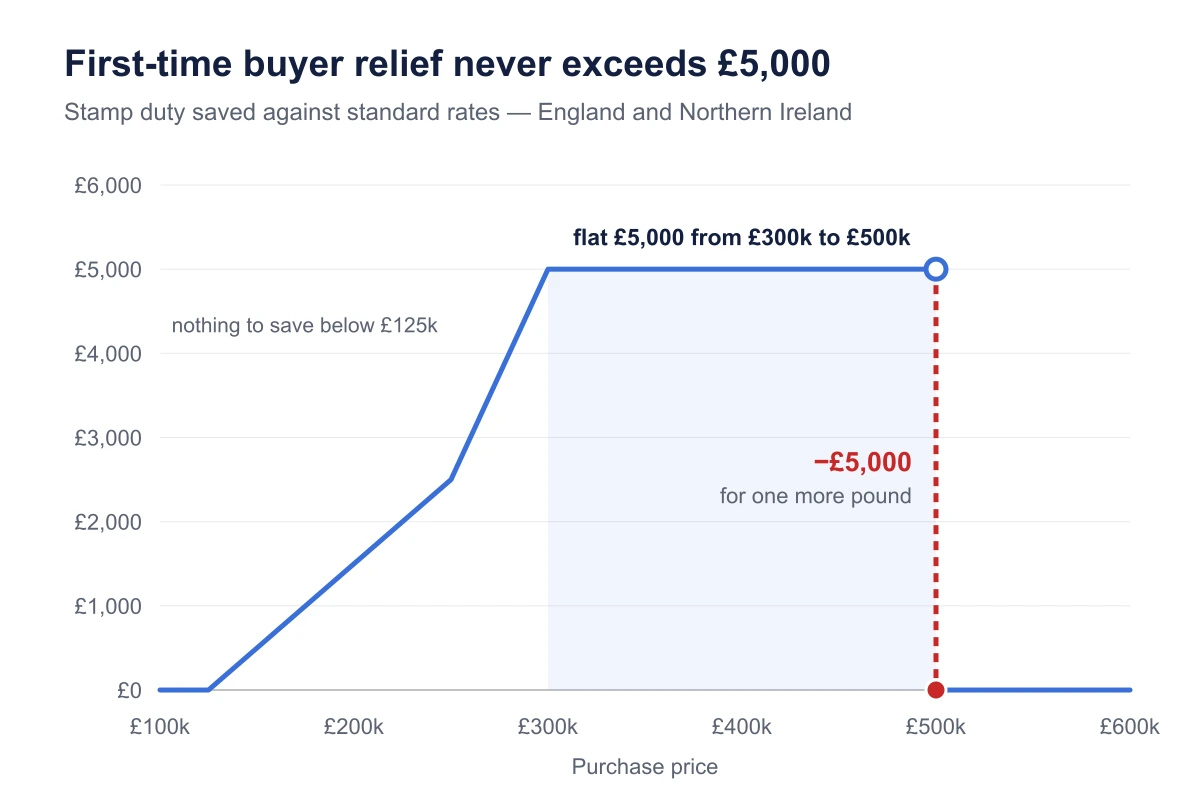
A first-time buyer pays no stamp duty on the first £300,000 and 5% on the part between £300,001 and £500,000 — so £10,000 on a £500,000 home, £5,000 on a £400,000 one and nothing at all up to £300,000. Pay £500,001 and the relief is not reduced, it is removed: the bill becomes £15,000. One pound more on the price costs five thousand pounds in tax, and it is the only threshold in the whole system that behaves that way.
Five Bands, and Most Buyers Meet Three
Stamp Duty Land Tax is charged in slices, like income tax. The rate attached to each band applies only to the part of the price inside that band, which is why no single percentage describes the bill. These are the rates for someone buying a home to live in, who already owns one.
| Portion of the price | Rate |
|---|---|
| Up to £125,000 | 0% |
| £125,001 to £250,000 | 2% |
| £250,001 to £925,000 | 5% |
| £925,001 to £1.5 million | 10% |
| Above £1.5 million | 12% |
A £400,000 purchase therefore costs nothing on the first £125,000, £2,500 on the next £125,000 and £7,500 on the remaining £150,000. Ten thousand pounds in total, an effective rate of 2.5% rather than the 5% the top band might suggest. Most buyers never reach the last two rows. For almost everyone the bill is built from the first three lines, and the middle one does most of the work.
One Pound Over £500,000 Costs £5,000
First-time buyer relief replaces those bands with a kinder pair: 0% to £300,000, then 5% to £500,000. Above £500,000 you cannot claim it. Not a reduced version of it — none of it.
| Price | First-time buyer | Everyone else |
|---|---|---|
| £499,000 | £9,950 | £14,950 |
| £500,000 | £10,000 | £15,000 |
| £500,001 | £15,000 | £15,000 |
| £505,000 | £15,250 | £15,250 |
The third row is the one to look at twice. Nothing about the house changed. The buyer did not move into a higher band or cross into a steeper rate — they simply stopped qualifying, and the entire relief fell away at once. An offer of £500,000 and an offer of £500,001 are a pound apart to the seller and five thousand pounds apart to the buyer, which makes this one of the few thresholds in British tax where the right move is obvious and costs the other side almost nothing.
Nor does it heal. The £5,000 does not come back at £550,000 or £600,000; above the threshold a first-time buyer is simply an ordinary buyer, paying what an ordinary buyer pays. What the cliff really represents is the moment a £5,000 discount is withdrawn, and it never returns however much more you spend.
Why the Relief Stops Growing at £300,000
Here is the part that surprises people who have read the rules twice. Between £300,000 and £500,000 the relief is worth exactly £5,000 — not roughly, not on average, but precisely that figure at every price in the range.
The reason is that both schedules charge 5% across that whole stretch. A first-time buyer pays 5% on everything above £300,000; an ordinary buyer pays 5% on everything above £250,000. The two bills climb at an identical rate, so the gap between them is frozen at whatever it was when the relief reached its maximum. Only the starting points differ.
| Price | First-time buyer | Everyone else | Relief is worth |
|---|---|---|---|
| £200,000 | £0 | £1,500 | £1,500 |
| £250,000 | £0 | £2,500 | £2,500 |
| £300,000 | £0 | £5,000 | £5,000 |
| £400,000 | £5,000 | £10,000 | £5,000 |
| £500,000 | £10,000 | £15,000 | £5,000 |
| £500,001 | £15,000 | £15,000 | £0 |
So the relief is generous to someone buying a £300,000 flat and no more generous at all to someone buying at £480,000, even though the second buyer pays twice as much tax. What looks like a percentage is really a fixed discount, and knowing that changes how you read it: stretching the budget from £420,000 to £480,000 does not cost you any relief, while stretching from £495,000 to £505,000 costs you all of it.
A Second Property Adds Five Per Cent of Everything
Buying a property that leaves you owning more than one brings a surcharge of 5% on top of the ordinary rates. The published table shows this as a separate set of bands — 5%, 7%, 10%, 15% and 17% — which makes the sum look harder than it is.
That appearance is misleading. Because five percentage points are added to every band, including the nil-rate band that charges nothing at all in the ordinary table, the surcharge resolves to a flat 5% of the whole purchase price at every price, with no threshold hidden inside it and no band structure left to work through.
| Price | Ordinary bill | Surcharge | Total |
|---|---|---|---|
| £200,000 | £1,500 | £10,000 | £11,500 |
| £300,000 | £5,000 | £15,000 | £20,000 |
| £500,000 | £15,000 | £25,000 | £40,000 |
| £750,000 | £27,500 | £37,500 | £65,000 |
Notice the £200,000 row. The ordinary bill is £1,500 and the surcharge is £10,000 — nearly seven times the tax the purchase would otherwise attract. At the cheap end the surcharge is not an addition to the bill so much as the entire bill, because the ordinary rates have barely started while the surcharge is already charging on every pound from the first one.
Owning Two Homes by Accident
Chains break. Completion dates slip. If you buy your next home before the sale of the current one goes through, you own two properties on the day of completion and the surcharge is due in full, even though nobody involved intended you to be a second-home owner for a fortnight.
That money is recoverable. Where the new property is replacing your main residence, selling the old one within three years entitles you to a refund of the surcharge. The sticking point is a second deadline sitting behind the first: the claim must be made within twelve months of the sale, or of the filing date for the purchase, whichever falls later. People remember the three years and forget the twelve months, and the refund is lost by waiting rather than by failing to qualify.
The disposal also has to be complete. Keeping a share of the old property — a slice retained for a relative, say — means it has not been replaced, and the surcharge stays where it is.
Fourteen Days, Not Thirty-One
The return and the payment are both due within fourteen days of completion. That is an unusually tight window by the standards of British tax, where quarterly and annual deadlines are the norm, and it is short enough that the money has to exist well before the deadline rather than be found during it.
In practice a conveyancer files the return and collects the tax as part of the completion statement, so the number lands in your figures weeks ahead of the legal deadline. The thing to take from the fourteen days is not the filing date but the budgeting: stamp duty is cash, due at the same moment as the deposit and the fees, and it cannot be deferred to the far side of the move.
Three Countries, Three Different Taxes
Everything above describes England and Northern Ireland. Scotland and Wales do not charge Stamp Duty Land Tax at all — they charge Land and Buildings Transaction Tax and Land Transaction Tax respectively, each devolved, each with its own bands and its own rules about first-time buyers.
This matters more than a footnote suggests. People use the three names loosely, and a figure quoted for one country is simply wrong in another. If you are buying in Edinburgh or Cardiff, a bill worked out from the table above is not an approximation of what you owe; it answers a different question entirely.
One Name on the Deed Can Cost £25,000
The relief is tested across everyone buying, not just the person who has never owned a home. If one of two buyers has owned before, nobody gets it, and the half of the couple who would have qualified on their own receives nothing for having qualified.
Follow a single £400,000 purchase through three versions of the same transaction and the spread is startling, because the house, the mortgage and the price are identical in all three and only the names on the paperwork change.
| Who is buying | Stamp duty on £400,000 |
|---|---|
| Both first-time buyers | £5,000 |
| One has owned a home before, owns nothing now | £10,000 |
| One owns another property and is keeping it | £30,000 |
Six times the tax, on the same house. The third row is the one that catches people, because a partner who kept a flat and lets it out turns the purchase into an additional property for the whole of it — the surcharge applies to the transaction, not to that person's share of it. Couples in this position sometimes find that buying in one name is cheaper, though that decision reaches well past tax into ownership, lending and what happens if the relationship ends, and it is not one to make from a table.
The Tax Competes With Your Deposit
Stamp duty is paid in cash, at completion, out of the same savings that were going to be the deposit. Every pound of it is a pound you are not putting down, and a pound you therefore have to borrow instead. That makes the threshold worse than it first looks.
Take a first-time buyer with £60,000 saved. At a £500,000 price the tax takes £10,000, leaving a £50,000 deposit and £450,000 to borrow. Push the price one pound higher and the tax takes £15,000 instead — the deposit falls to £45,000 and the mortgage rises to £455,001. The threshold does not just cost £5,000. It moves that £5,000 from the side of the ledger you own to the side you pay interest on, for as long as the mortgage runs.
| Interest rate | Yearly cost of borrowing the extra £5,000 |
|---|---|
| 3% | £150 |
| 4% | £200 |
| 5% | £250 |
| 6% | £300 |
The rate you actually pay will be your own, and the figures above are simply the arithmetic of 5,000 multiplied by it. Run them over a twenty-five year term and the pound that crossed the threshold has quietly cost several thousand more than the £5,000 that showed up on the completion statement. This is also the reason the tax deserves a line in the budget from the very start rather than at the end: it does not merely add to the cost of moving, it reduces the deposit, and the deposit is the number every other figure in the purchase is built on.
What to Do With the Threshold
If you are a first-time buyer looking at homes near half a million, the £500,000 line is worth treating as a hard ceiling rather than a guideline. An asking price of £510,000 is £5,500 of extra tax on top of £10,000 of extra price, and a seller who understands that their £500,001 buyer is £5,000 worse off than their £500,000 buyer has a reason to meet you at the round number.
Lower down, the thresholds are gentler and the planning is simpler: under £300,000 a first-time buyer pays nothing, and between £300,000 and £500,000 the relief is a flat £5,000 that neither grows nor shrinks with the price. Work the bill out before you make an offer rather than after, because this is one of the few costs in a house purchase that is fixed by arithmetic and not by negotiation, valuation or luck.